
The New Biodock Is Live: A Faster, More Flexible Way to Work With Biological Imaging Data
Meet the new Biodock: rebuilt with AI Agents, mobile access, Python scripting, Public Models, and new ways for research teams to scale their image analysis workflows.

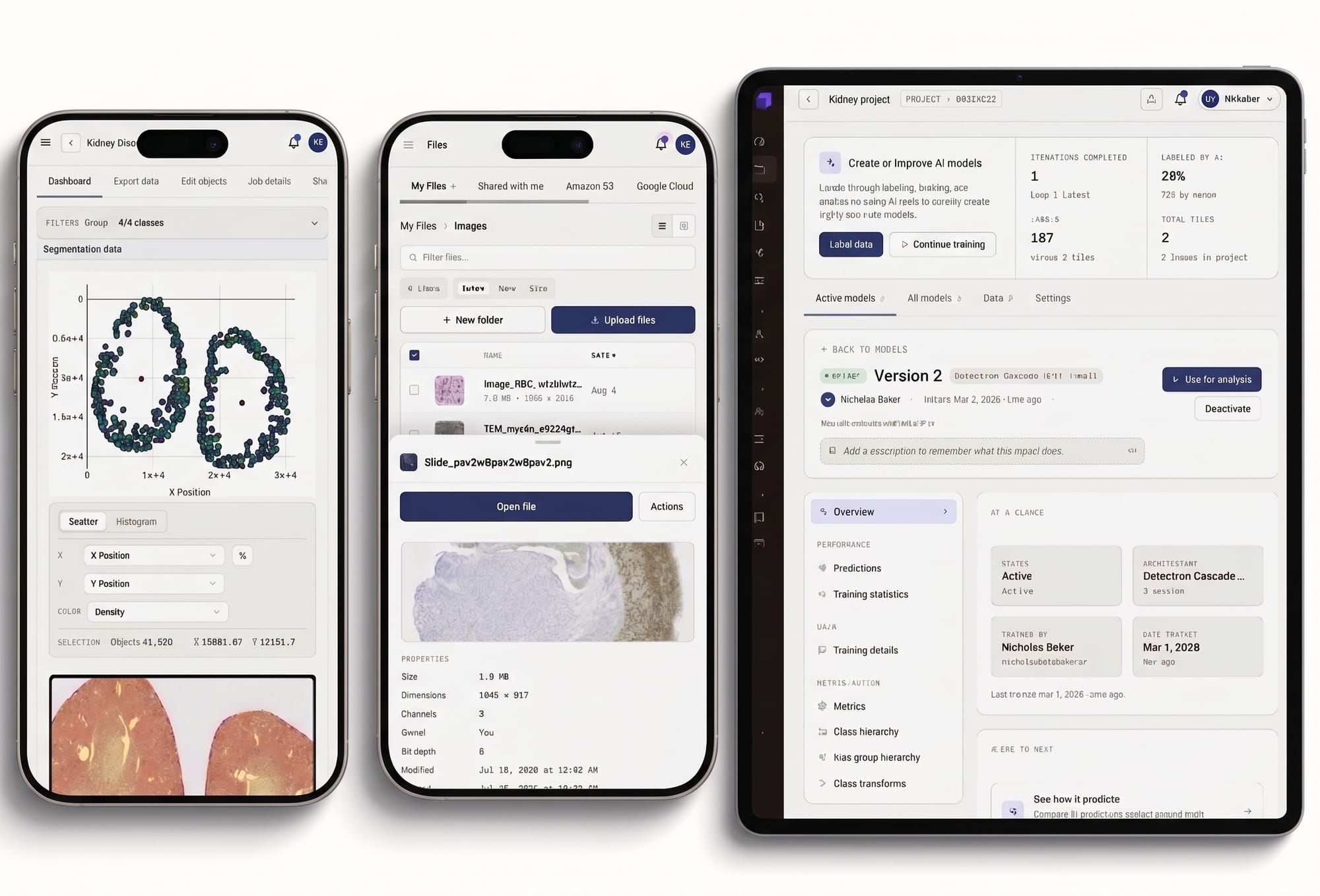
We’ve rebuilt Biodock from the ground up.
This release is more than a visual redesign. It gives researchers a more flexible way to analyze biological images, work with results, collaborate across teams, and build on existing AI models.
The goal was simple: make Biodock easier to use for the way research actually happens today, while creating a stronger foundation for what we build next.
Here’s what’s new.
Ask questions directly about your results with the AI Assistant
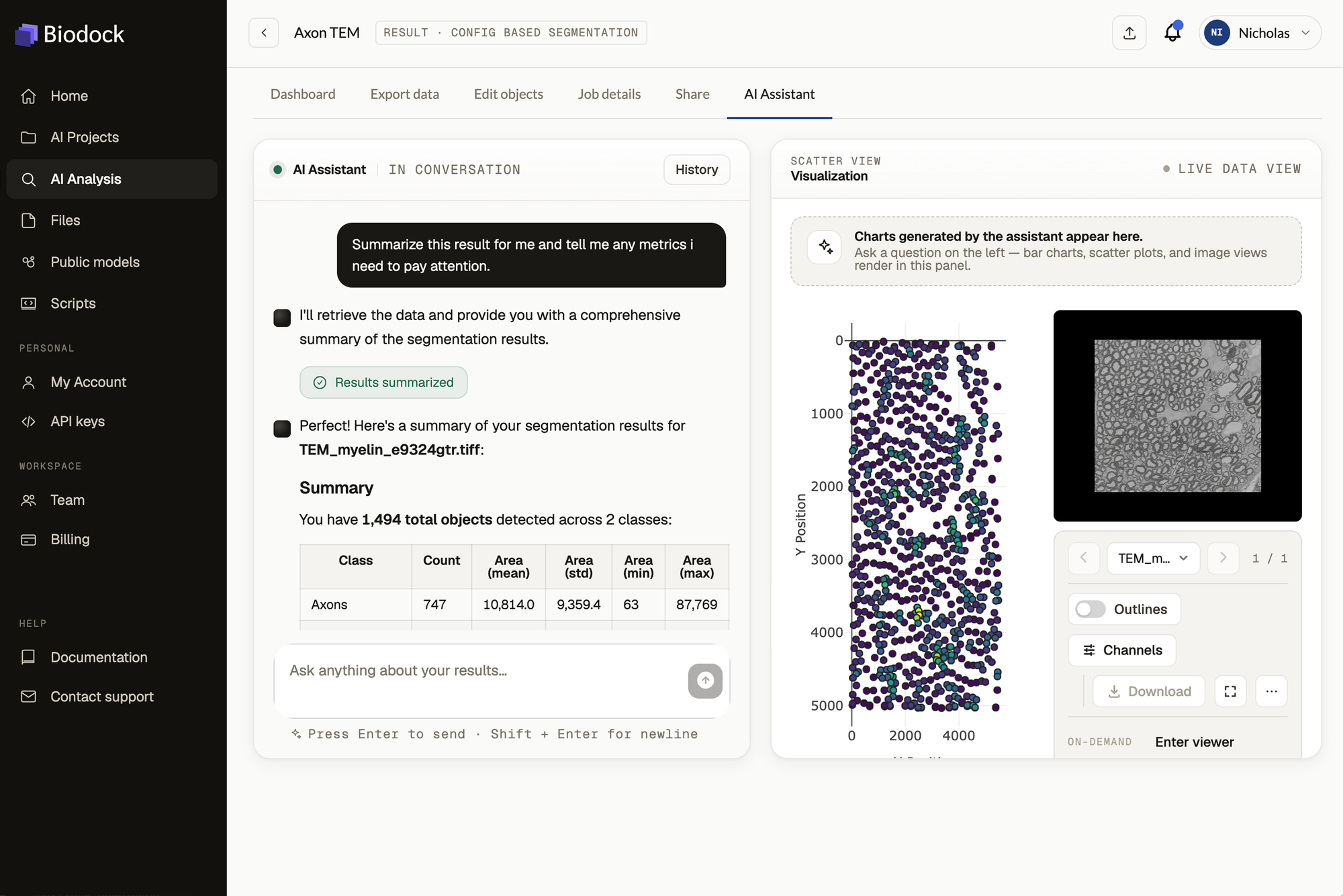
Image analysis can generate a lot of information. Finding the specific measurement, comparison, or result you need can sometimes mean moving between dashboards, tables, and different parts of an analysis.
Biodock’s AI Agents let researchers interact directly with their analysis results.
You can ask biologically relevant questions about your data, calculate custom metrics, and explore specific measurements without having to manually work through every dashboard or export.
For example, a researcher could ask about differences between detected cell populations, quantify a custom relationship between measurements, or calculate a metric that is specific to their experiment.
The goal is to make it easier to move from image analysis to scientific interpretation while giving researchers more flexibility in how they interrogate their results.
Rather than limiting teams to a fixed set of predefined outputs, AI Agents provide another way to explore the data around the questions that matter to the experiment.
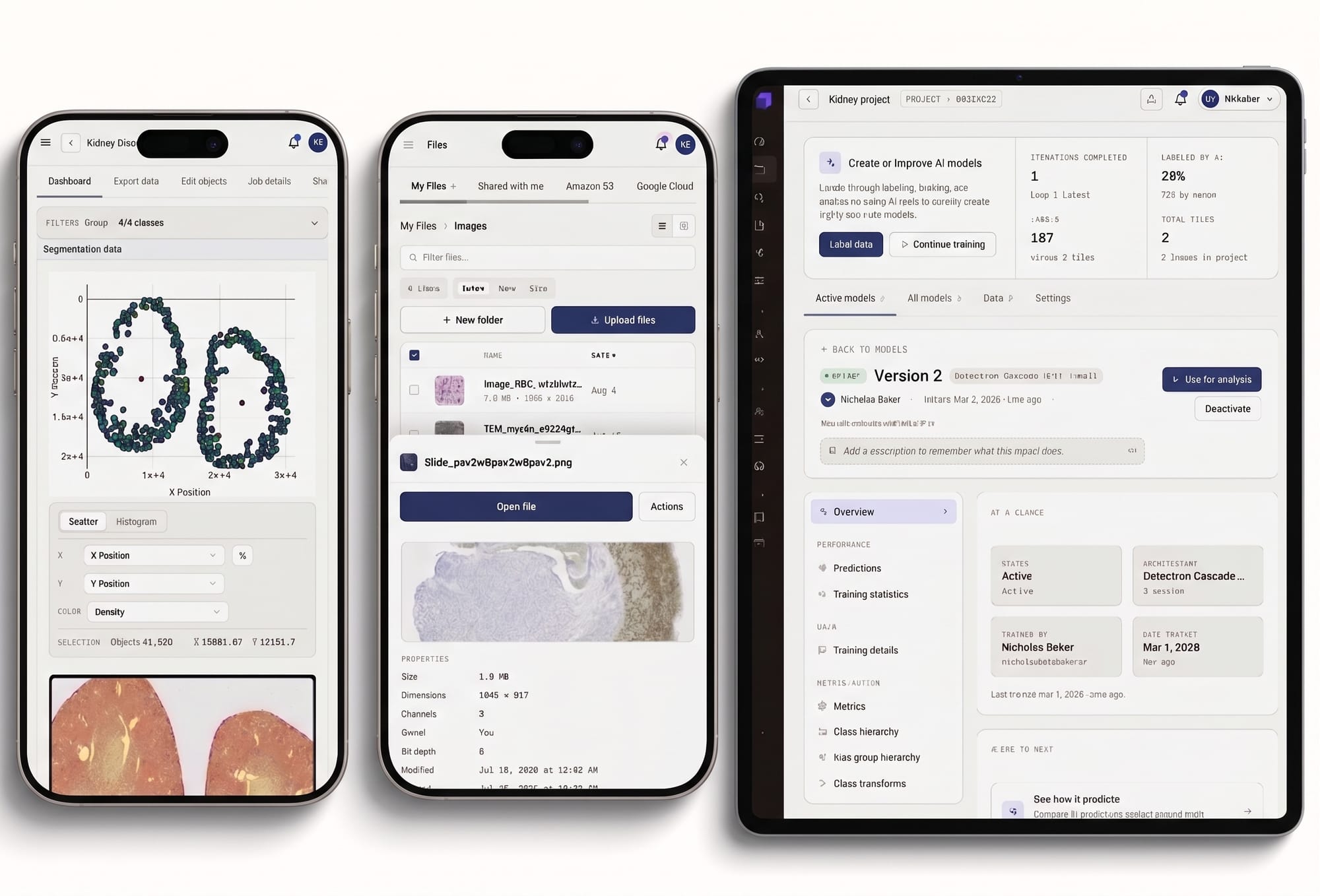
Use Biodock from mobile and tablet devices
Research does not always happen at a desk.
With the new mobile and tablet experience, you can access Biodock when you are away from your primary workstation.
That means you can check the status of an analysis, review a project, or start a training run without needing to return to your computer.
For researchers managing long-running analyses or multiple projects, this gives teams more flexibility in how they monitor their work.
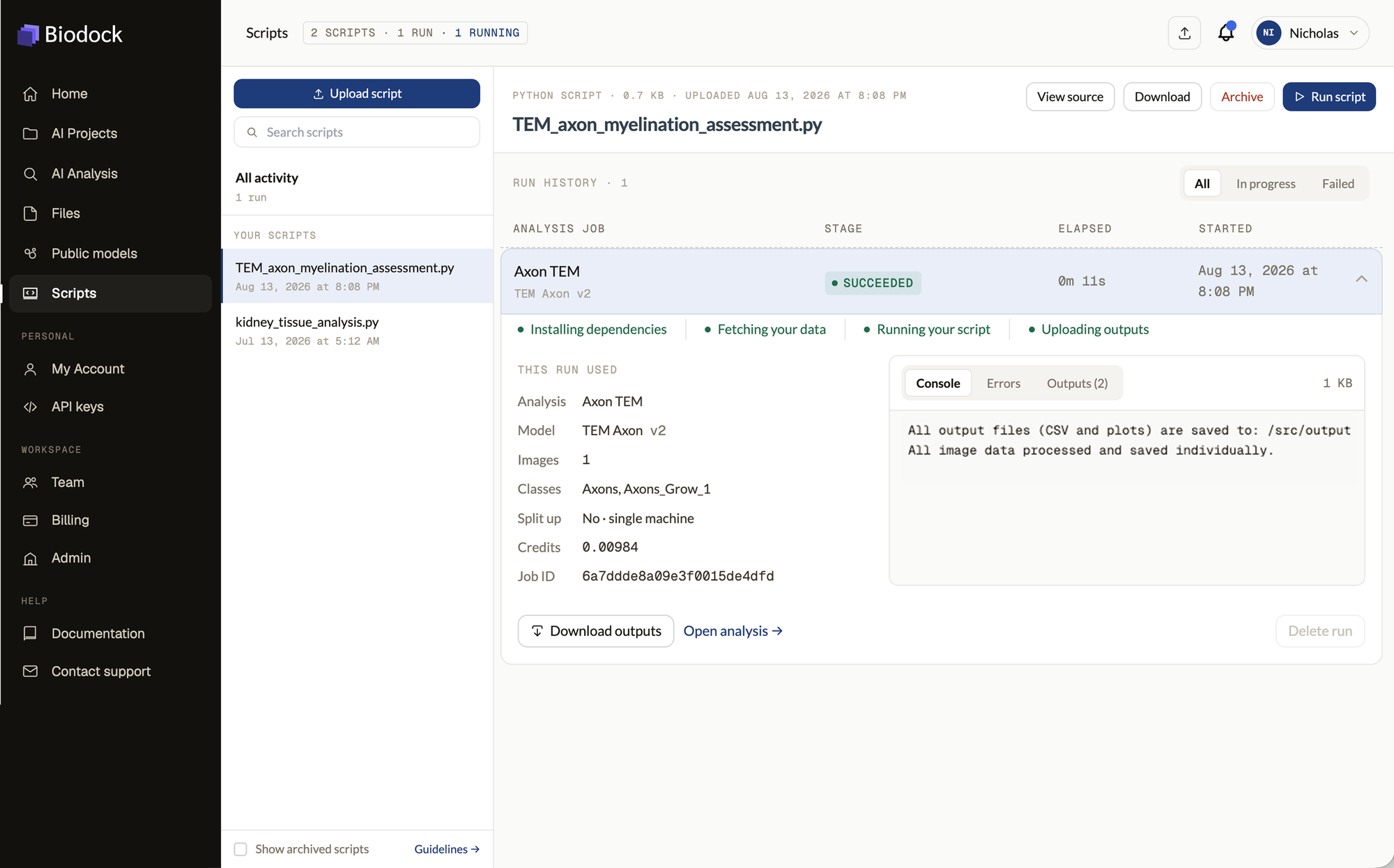
Run your own Python scripts directly on results
Every research workflow is different, and sometimes a standard analysis is only the beginning.
Biodock now allows researchers to run their own Python scripts directly on their results.
This gives more technical users the flexibility to extend an analysis, perform custom calculations, transform outputs, or integrate additional steps into their workflow without having to move everything into a separate environment first.
It also helps bridge the gap between no-code image analysis and fully customized computational workflows.
Teams can use Biodock for accessible AI-powered image analysis while still having the freedom to go deeper when their research requires it.
Build on existing work with Public Models
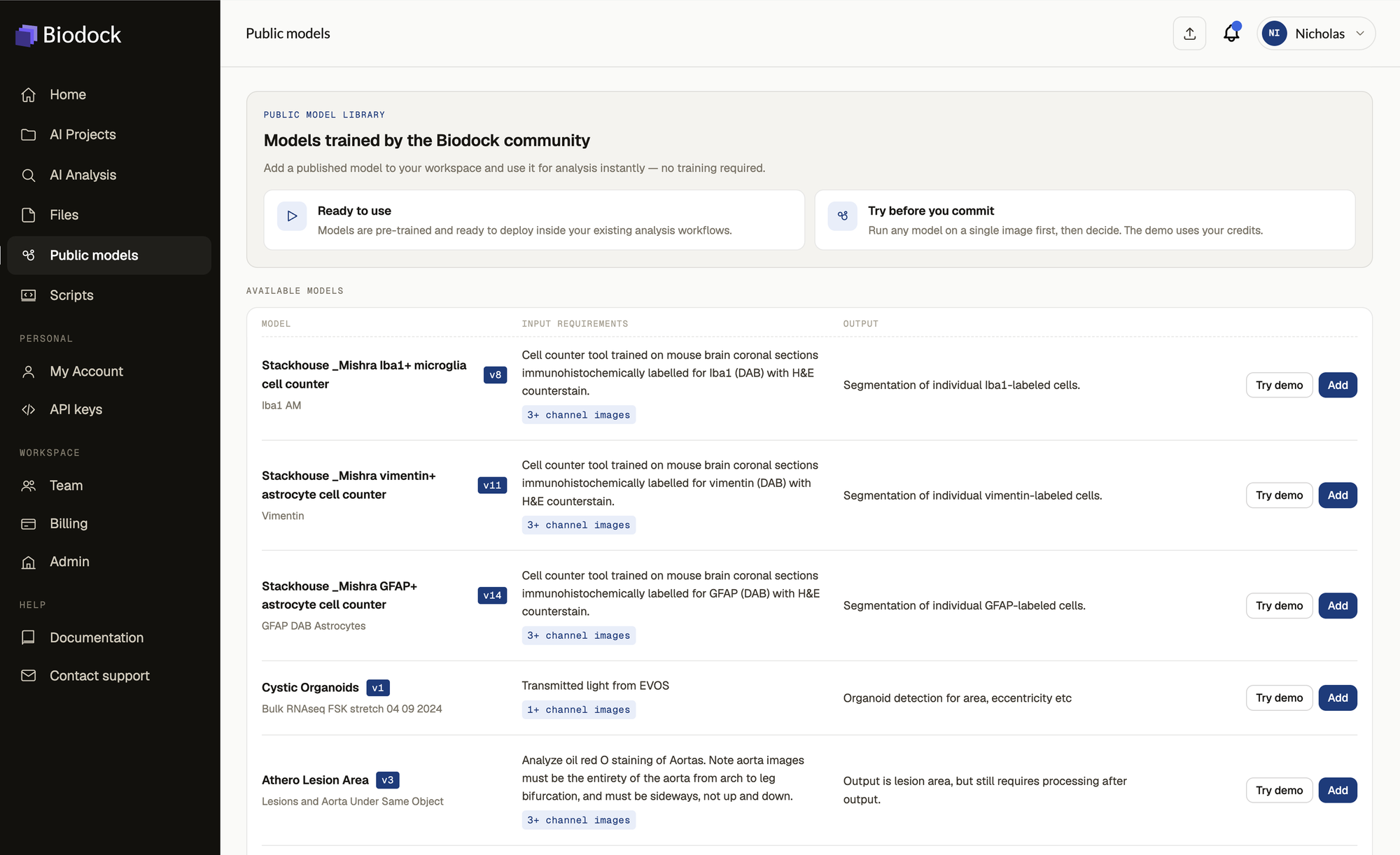
One of the biggest challenges in applying AI to biological imaging is that teams often have to start from scratch.
Public Models are designed to make that less necessary.
Researchers can now make trained models available for others to discover and use, making it easier for the community to build on work that already exists.
Instead of every team independently solving the same image-analysis problem, researchers can explore models that may already be relevant to their data and use them as a starting point for their own projects.
Over time, we believe this can make biological image analysis more collaborative and reduce duplicated effort across research teams.
More flexible options for academic teams
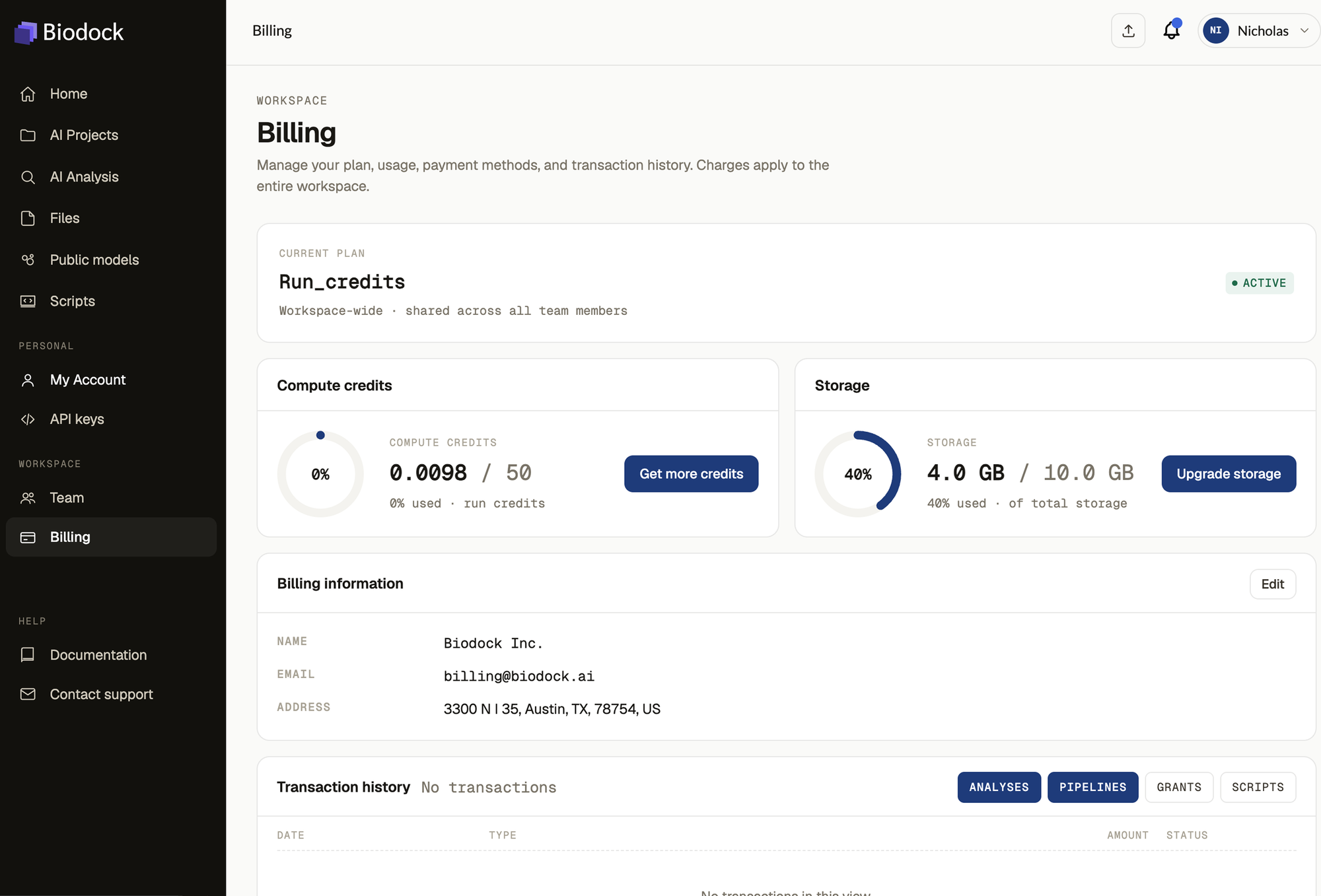
Supporting academic research has been part of Biodock from the beginning.
Academic users can continue to run analyses using Biodock’s academic allowance. For labs with more streamlined projects that need consistent access to additional analysis capacity, credits, and storage, we’ve introduced a new flexible option.
This is designed for research groups whose work has grown beyond occasional analysis and requires a more predictable level of access over time.
The academic allowance remains available, while this added option gives labs a practical way to scale when their projects demand more capacity.
A platform built around real research workflows
Biological imaging is becoming increasingly important across areas including microscopy, pathology, cancer research, electron microscopy, and other forms of image-based science.
At the same time, the datasets researchers work with are getting larger, and the analysis methods are becoming more sophisticated.
The challenge is no longer simply whether AI can analyze an image.
It is whether researchers can use these tools easily, understand the results, adapt the workflow to their own experiments, and collaborate with others without adding unnecessary technical complexity.
That is what we want Biodock to help solve.
The new platform brings image management, AI analysis, results, custom computation, and collaboration into one environment while giving teams more flexibility in how they work.
And this release is only the foundation.
We have much more planned for Biodock, and the architecture behind this rebuild gives us more room to keep improving the platform as research workflows evolve.
Explore the new Biodock
The new Biodock is available now.
If you already use Biodock, log in and explore the redesigned platform and new capabilities.
If your team is working with microscopy, pathology, or another image-based research workflow and you want to see how Biodock could fit into your process, get in touch with us or schedule an intro call through the Biodock company profile.
We’d love to hear what you’re working on.